The license you probably haven’t heard of, and why that’s about to change
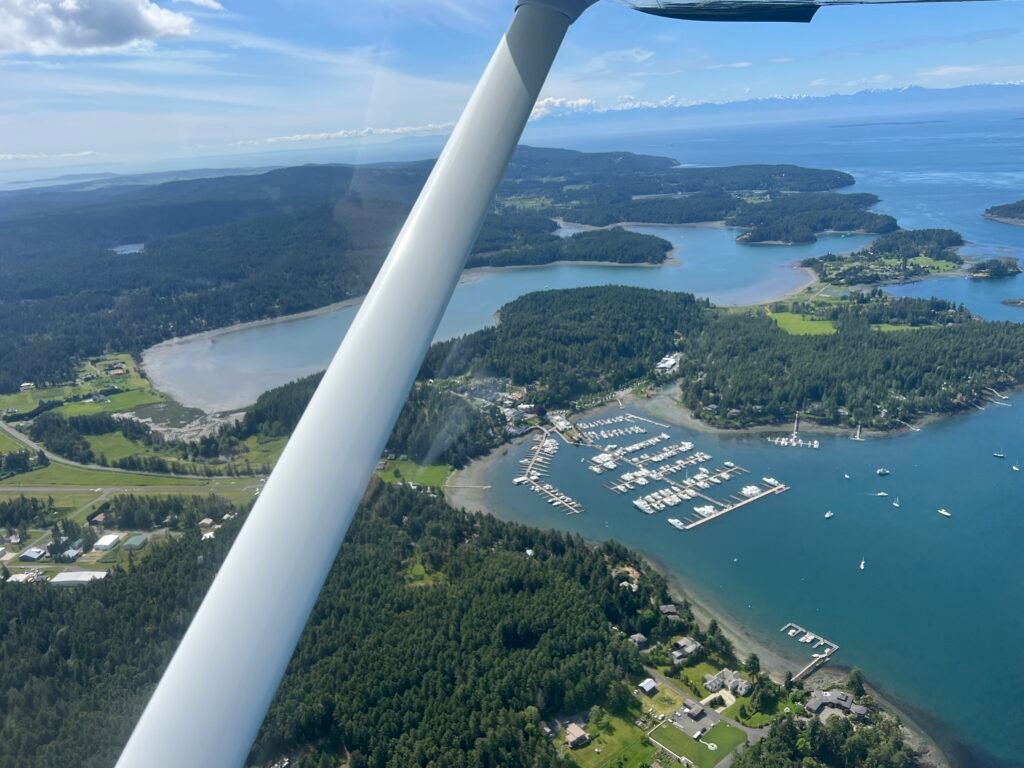
If you’ve ever thought about learning to fly but stopped at “It takes too long”, “It’s too expensive”, “I’d have to pass an FAA medical exam, and what if I can’t?”, or “I could lose my medical years from now and end up grounded”, there’s a path you may not have considered. It’s called a Sport Pilot certificate, and thanks to a major rule change that took effect on October 22, 2025, it’s a much bigger deal than it was a year ago.
The reason you probably haven’t heard much about it: the rule change is new. The FAA’s MOSAIC rule (Modernization of Special Airworthiness Certification) was announced at the EAA AirVenture airshow in Oshkosh in July 2025, and the sport pilot provisions only became law in late October 2025. Word is still getting around.
Here’s the short version of what changed, what it means for you, and what the catch is, because there is a catch, and you deserve to hear about it up front.
What is a Sport Pilot, in plain English?

A Sport Pilot certificate is a real FAA pilot certificate. You can fly real airplanes, take a friend or family member with you, fly cross-country, and land at airports across the country. It’s not a “learner’s permit.” It’s a license to fly.
What makes it different from the more familiar Private Pilot license is that it was designed from the ground up to be simpler, faster, and cheaper, built around the kind of flying most pilots actually do anyway.
The four big advantages:
- No FAA medical exam required. You self-certify using your driver’s license.
- Fewer training hours required. The FAA minimum is 20 hours instead of 40.
- Lower total cost. Most students complete training for roughly half of what a Private Pilot license costs.
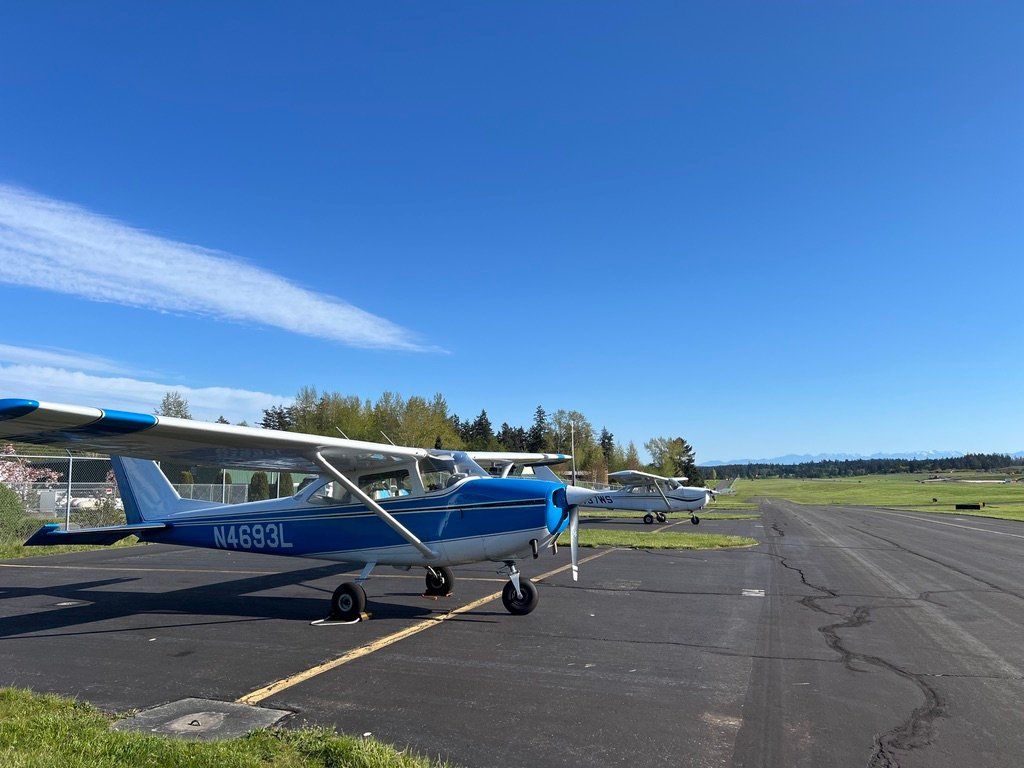
- Thanks to MOSAIC, you can now fly real airplanes, including the Cessna 172, certain Piper Cherokees, and many other familiar four-seat aircraft.
That last point is the headline. Before October 22, 2025, sport pilots were limited to small two-seat aircraft under 1,320 pounds. After MOSAIC, the FAA estimates sport pilots can now fly roughly 70% of the existing general aviation fleet, including the airplane I teach in, a Cessna 172. AOPA has confirmed that most Piper PA-28 Cherokee variants also qualify (the higher-stall-speed Cherokee 235 is one of the few that doesn’t), along with many Cessna 182 models and the Maule M-4 series, among others.
The “no medical” thing, what it actually means

This is the part that excites most prospective students, and it’s worth being precise about why it matters.
For most pilots, the worry about the FAA medical isn’t the cost or the inconvenience. It’s something much bigger: the fear of investing thousands of dollars and hundreds of hours learning to fly, only to lose your medical down the road and be grounded. Every traditional pilot lives with that anxiety. You can pass your medical at age 35, fly happily for a decade, and then at your renewal exam the AME discovers something, blood pressure, a heart murmur, sleep apnea, a medication you started taking, and suddenly you can’t legally fly the airplane sitting in your hangar. People have walked away from aviation entirely because of this risk. Others never start, because they’re worried they won’t qualify in the first place.
Sport pilot removes that worry for most people.Instead of going to an Aviation Medical Examiner every few years to prove you’re medically fit to fly, sport pilots use a fundamentally different standard: you self-certify your fitness to fly, using your driver’s license as the baseline credential. No AME exam at the start. No recurring exams that could ground you later. There’s no FAA medical gatekeeper standing between you and your next flight, your honest assessment of your own fitness is the standard, and as long as you can keep a driver’s license and you’re being truthful about your health, you can keep flying.
You do still have a real responsibility called self-certification. Before every flight, you’re required to honestly determine that you’re medically fit to fly that day, well-rested, not on disqualifying medications, no acute condition that would make flying unsafe. And just because the FAA isn’t checking up on you doesn’t mean anything goes. The FAA’s list of medications that disqualify a pilot from flying applies to sport pilots too. So do conditions that the FAA considers disqualifying. If you’re taking a medication that would disqualify you for a Third Class medical, you can’t honestly self-certify yourself fit to fly as a sport pilot either. The honest gut-check is real.
The big difference is structural: nobody can take your sport pilot privileges away because of a finding at a recurring medical exam, because there is no recurring medical exam. As long as your health and medications stay compatible with flying, you fly. If your situation changes, a new diagnosis, a new prescription, you make the honest call and ground yourself if it’s required.
There is one important catch, and the order you do things in matters. If you’ve ever applied for an FAA medical certificate and been denied, or if you’ve held a medical and had it suspended or revoked, the driver’s license pathway is closed to you until that’s resolved. The driver’s license option is built for people who haven’t started down the FAA medical road, or who passed their last one. If you’re at all unsure about whether you could pass an FAA medical, talk to me first, before you walk into an AME’s office. Once you apply, you’ve taken on a different set of rules, and a denial can close off the sport pilot path entirely.
This same “order matters” principle applies to one specific situation worth calling out: color vision deficiency. Color blindness affects roughly 8% of men, and many of them have been told at some point that they can’t be pilots. That’s not quite right. Under the traditional FAA medical, a color vision deficiency typically results in a restricted medical (often “Not Valid for Night Flying or by Color Signal Control”), and in some cases, a denial. But color vision isn’t required to fly day VFR under sport pilot rules. State driver’s licenses almost never include color-vision restrictions, so for the typical color-blind person who has never applied for an FAA medical, the sport pilot path is wide open. If you’re color blind and have been told you can’t fly, that may not be true anymore.
Let’s talk about the limitations honestly
Every pilot certificate has limitations. Sport pilot has more than private pilot does. Here are the real ones, in order of how likely they are to actually affect your flying:
You can only carry one passenger. This is the limitation people hear first and worry about most. In practice, it’s almost never an issue. The vast majority of small-airplane flying, even by Private Pilots in four-seat airplanes, happens with one passenger or none. Think about how often you’d actually want to load three people plus yourself into a small airplane for a flight. For most pilots, the answer is “rarely or never.” If you do find yourself in that situation, you can always upgrade later (more on that below).
Daytime, good-weather flying only (unless you add endorsements). Sport pilot privileges are for VFR, visual flight rules, flight in good weather. Night flying is now possible under MOSAIC, but it requires additional training, an endorsement, and either a medical certificate or BasicMed. Most recreational pilots fly during the day in good weather anyway.
No flying for hire. You can’t get paid to fly passengers or cargo as a sport pilot. If your goal is a career as a commercial pilot, sport pilot is not the path. (We’ll talk about that in a minute.)
Maximum 10,000 feet MSL (or 2,000 feet AGL, whichever is higher). Plenty high for almost all general aviation flying around the Pacific Northwest, including everything in my advanced cross-country courses. The Cascades pass elevations we deal with sit well below this ceiling.
Controlled airspace requires an endorsement.Flying into Class B, C, or D airspace requires a logbook endorsement from a CFI. This is a one-time training item, not a recurring hurdle.
Aircraft must meet performance criteria. Not every airplane qualifies. The aircraft has to have a stall speed of 59 knots or less in clean configuration, among other things. The good news: a huge portion of the GA fleet now qualifies, including the Cessna 172 I instruct in. The not-as-good news: some popular four-seaters with higher stall speeds do not.
For the kind of recreational flying that draws most people to aviation, flying yourself and one other person to interesting places in beautiful country during the day, these limitations don’t bite. That’s exactly what sport pilot was designed for.
The cost angle
A Private Pilot license typically runs $15,000–$20,000 in this part of the country, sometimes more.
A Sport Pilot certificate typically runs roughly half that, most students complete it in the $8,000–$13,000 range depending on how many hours they need beyond the 20-hour minimum. (Most students need more than the minimum; figure 30–40 hours is realistic.)
Why is it cheaper? Fewer requirements, fewer required hours, and no medical exam fees.
Yes, you can do all the cross-country flying
This is the part I’m most excited about for prospective students. The advanced cross-country courses I teach are all flyable as a sport pilot.
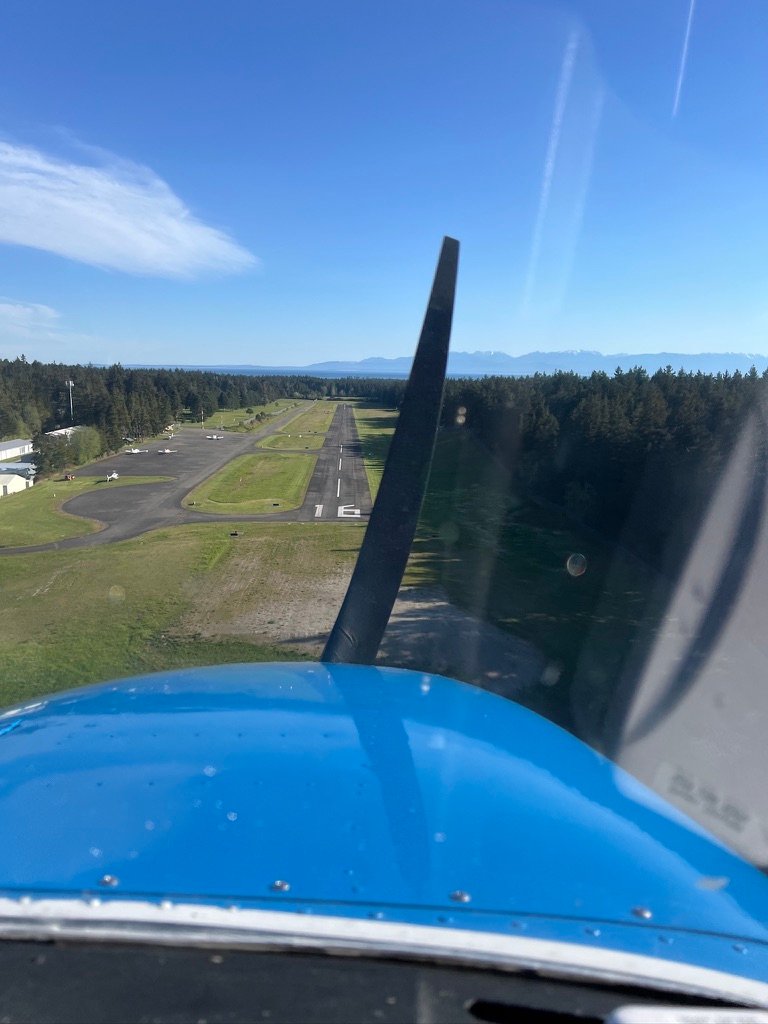
The Pacific Northwest has some of the most beautiful and interesting flying in the country, and sport pilot privileges are more than enough to take it all in. With me as your instructor, you can fly:
- The Oregon Coast, coastline, fog patterns, beach approaches, and stunning scenery from Astoria south.
- Washington to California, a multi-day route down the West Coast that’s one of the most rewarding cross-countries in American aviation.
- The Columbia River Gorge, canyon flying, wind awareness, and one of the most dramatic geological features in North America.
- Crossing the Cascades, mountain flying technique, pass selection, weather reading, and the views to match.
- The San Juan Islands, island hopping, short-field work, and some of the prettiest flying anywhere.
None of these require a Private Pilot certificate. Every one of them is within reach as a sport pilot flying in the Cessna 172.
What if I want to become a Private Pilot eventually?
You absolutely can, and everything you train for as a sport pilot counts toward your Private Pilot certificate. No hours are wasted. You can think of sport pilot as a milestone on the way to private, or as a destination in itself. Both are valid choices.
Some students like the sport-pilot-first approach because it gets them flying as pilot-in-command sooner, with less money committed up front, and they can decide later whether to continue on to private. Others know from day one that they want the Private Pilot certificate (often because they want to fly with more than one passenger, fly at night without endorsements, or pursue an instrument rating eventually) and head straight there.
I train students for both paths. If you’re not sure which is right for you, that’s a conversation we should have, and the answer often becomes clear after a discovery flight and a short consultation about your goals.
Who is the sport pilot path actually best for?
In my experience instructing here at Arlington Municipal Airport (KAWO), the sport pilot route makes the most sense for:
- Adults who want to fly recreationally, mostly with their spouse, a friend, or alone.
- People who are worried about the FAA medical, whether because they’re not sure they’d qualify in the first place, because they have a condition (including color vision deficiency) that complicates the standard medical, or because they don’t want to live with the risk of being grounded by a future renewal exam.
- Career changers who want to start flying sooner instead of committing $15k to $20k before they know how much they enjoy it.
- Pilots who already know they’re going to fly day-VFR, good-weather flights, which describes most general aviation pilots, honestly.
If any of that sounds like you, sport pilot is worth a serious look. And if it turns out partway through training that you want to go all the way to Private Pilot, great. We’ll keep going.
Ready to learn more?
If you’ve read this far, you’re more interested in flying than most people ever get a chance to act on. The next step is a discovery flight: you come out to KAWO, we go up in the 172 together, you handle the controls, and you find out what this actually feels like.
Get in touch and let’s talk about your goals. Sport pilot, Private Pilot, or just curious, I’d be glad to help you figure out the right path.
Bryan Gmyrek, CFI/CFII Emerald Air LLC | Arlington Municipal Airport (KAWO)FlyWithBryan.com
Copyright Emerald Air LLC 2026 – All Rights Reserved
Leave a Reply