Water Crossing Skills, Short-Field Proficiency, and Island Weather Assessment
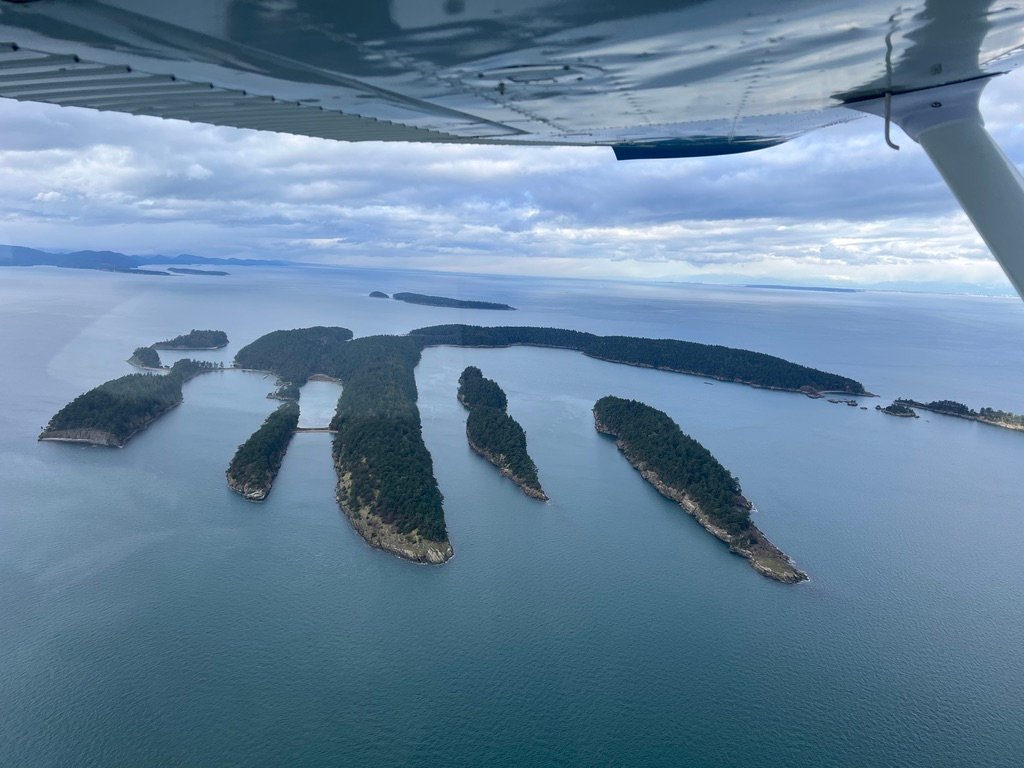
The San Juan Islands present a unique training environment that’s hard to replicate anywhere else — multiple short-field airports surrounded by terrain, overwater crossings that require deliberate risk assessment, rapidly changing microweather driven by marine influences, and military airspace that demands confident communication. It’s all less than an hour from Arlington.
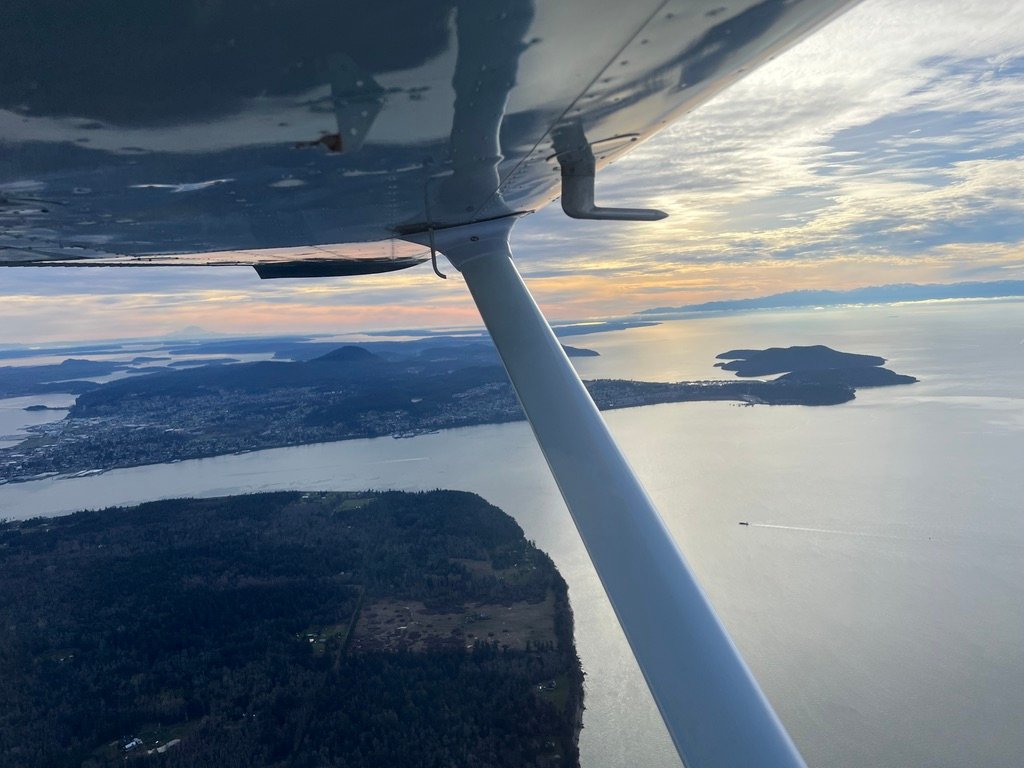
These are skills that standard flight training barely touches. If you want to fly safely in island and coastal environments — or simply become a sharper, more capable pilot — this is where you learn.
Your Day
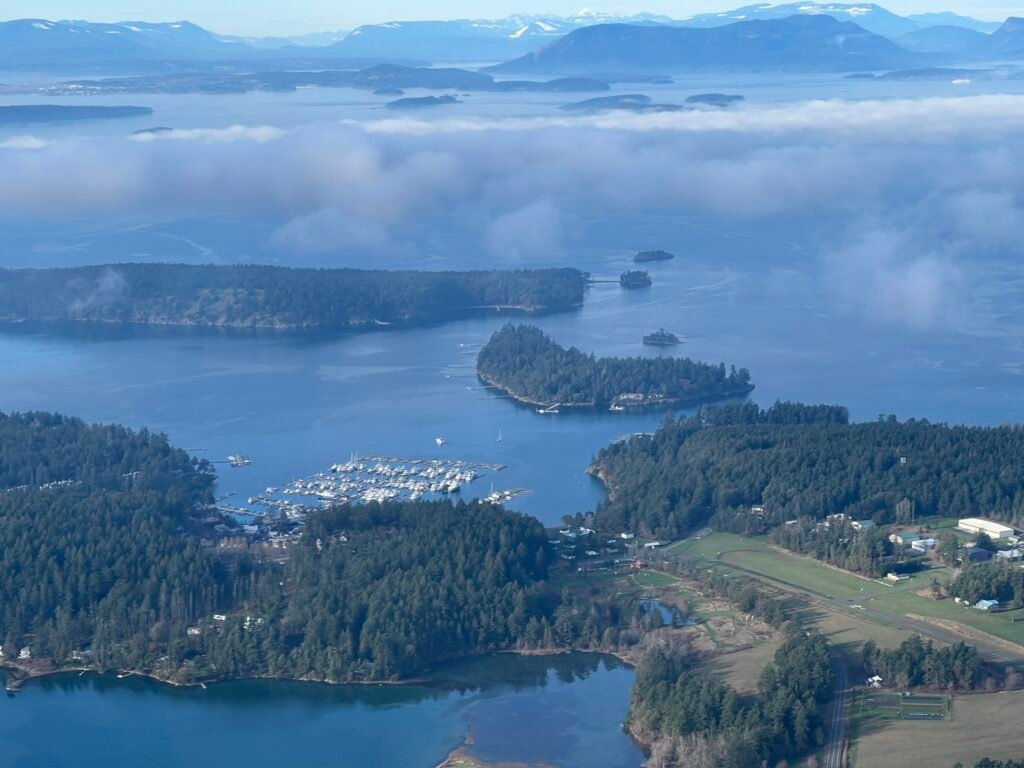
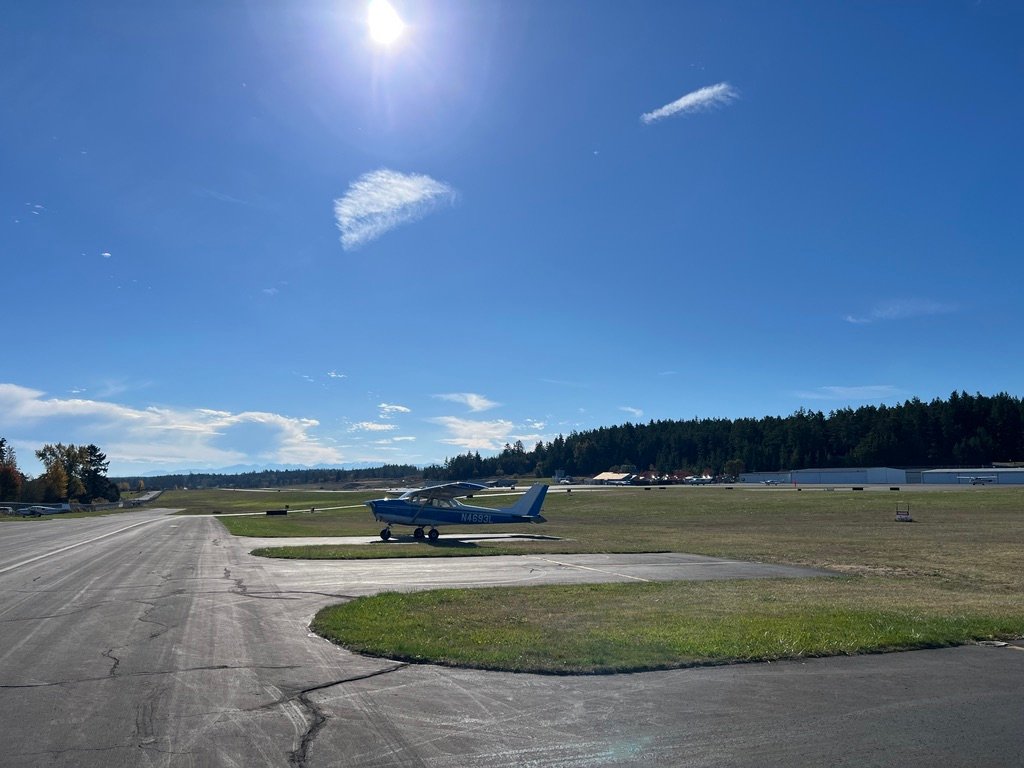
We depart Arlington Municipal Airport (KAWO) and head northwest into the San Juan archipelago. The specific routing adapts to the day’s weather and winds — that routing decision is itself part of the training. Plan on operating at several of these airports:
- Anacortes (74S) — Airspace transition practice and Skagit Valley terrain orientation
- Orcas Island (KORS) — Stabilized approach training in a terrain-surrounded environment with limited go-around options
- Roche Harbor (WA09) — A privately owned airstrip open during daylight, with a narrow paved runway and no line of sight between runway ends — demanding precise technique
- Friday Harbor (KFHR) — Pattern operations in a busier island traffic environment
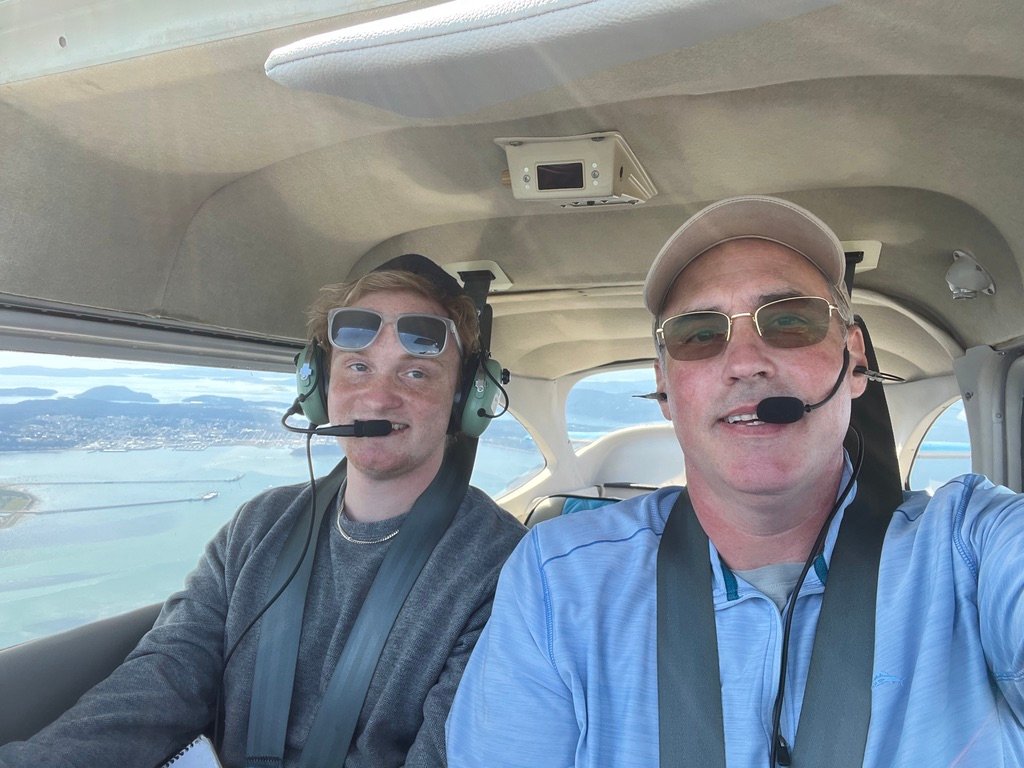
Between stops, we cover ground instruction on the ramp — reviewing what we’re seeing in the weather, discussing the next leg’s challenges, and building the analytical habits that make island flying safe and repeatable.
What You’ll Learn
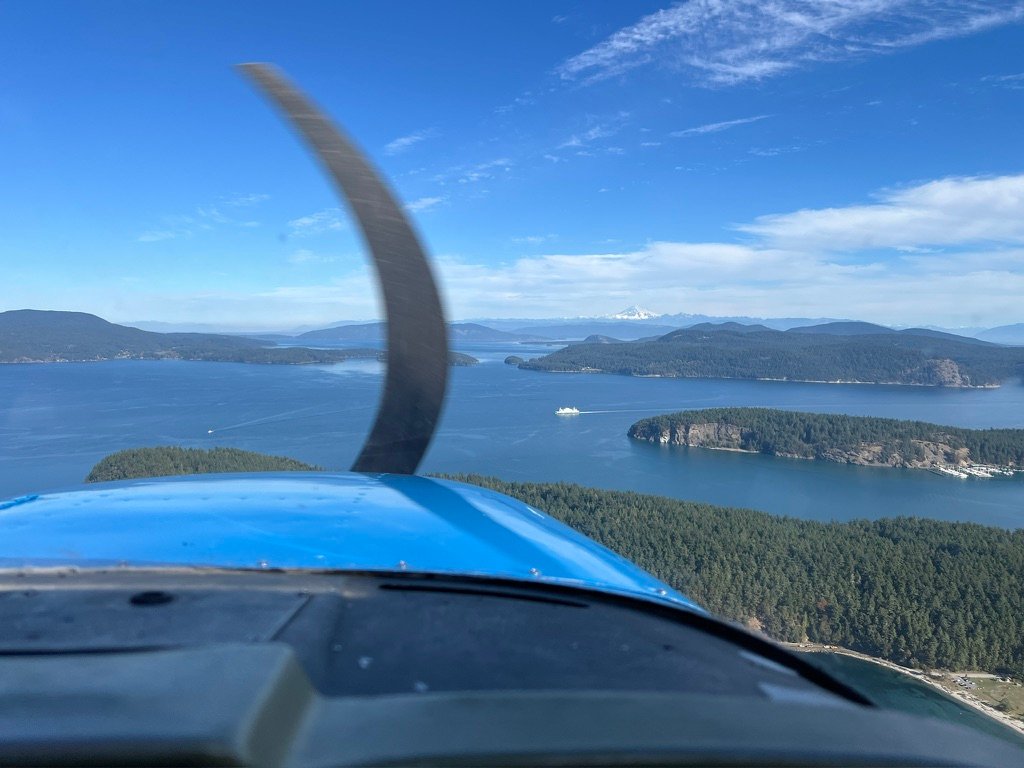
Water Crossing Decision-Making — How to evaluate overwater crossings: altitude selection for glide range, risk assessment when landing options are limited, and how to think about water crossings differently from overland flying.
Short-Field Operations at Real Airports — Stabilized approaches, airspeed management, and go-around decision points at airports where terrain and runway length make technique matter — not in a practice area with a 6,000-foot runway below you.
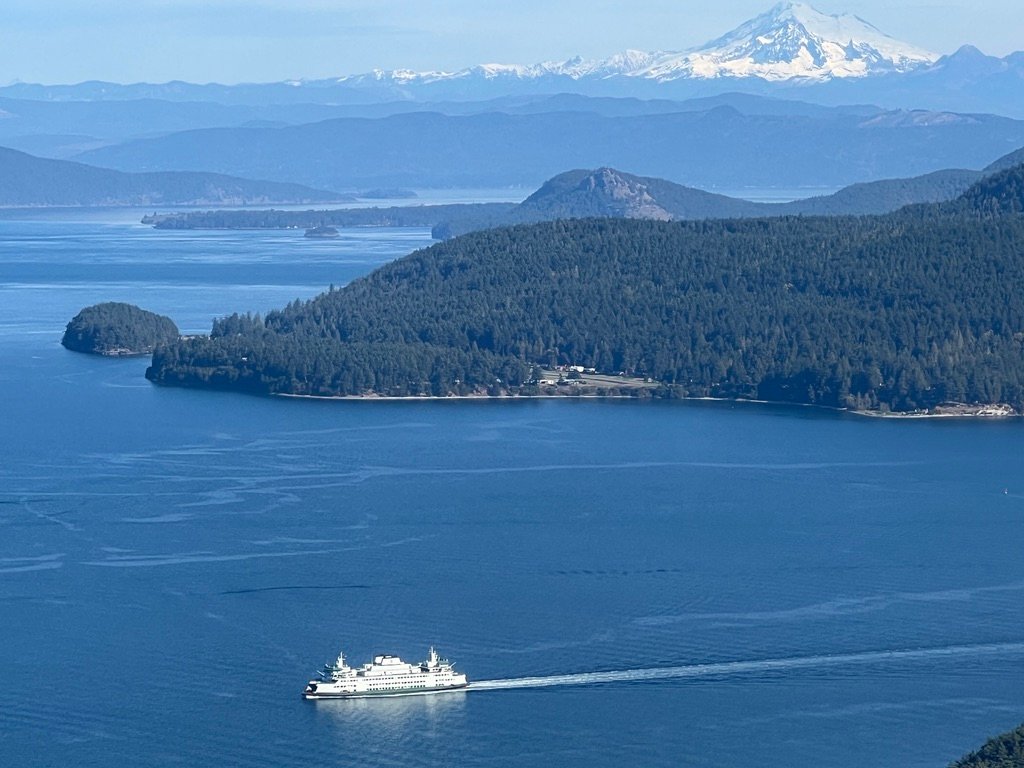
Island Weather Assessment — The San Juans generate their own microweather. Marine fog, convergence zones, and wind channeling between islands can change conditions rapidly. You’ll learn to read the signs in real time and incorporate them into your planning.
Military Airspace Navigation — Whidbey Island NAS and its associated airspace sit adjacent to the San Juans. You’ll practice navigating this environment confidently, with proper communication procedures and airspace boundary awareness.
Adaptive Multi-Leg Planning — Managing weather, wind, fuel, and time across multiple stops in a single day is a different skill than planning a simple cross-country. You’ll learn to build plans that flex with conditions.
The Details
| Departure | Arlington Municipal Airport (KAWO) |
| Flight Time | Approximately 3.5 hours |
| Ground Instruction | 2 hours (integrated throughout the day) |
| Aircraft | Cessna 172G — dual Garmin G5s, Garmin 175 GPS |
| Prerequisites | Private Pilot Certificate + current medical (OR Sport Pilot certificate/privileges) & flight review |
| Price | $1,050 (includes aircraft, instruction, and refreshments) Plus cost of 172 checkout in the school plane unless you have completed the checkout recently or frequently fly the school 172. |
| Certificate | Certificate of achievement awarded upon completion |
Have your own airplane? This course can be done in your aircraft. Contact me for instruction-only pricing.
Who This Is For
You’re a certificated pilot who wants to build proficiency in island and coastal flying environments. Maybe you’ve wanted to fly to the San Juans but aren’t confident in the water crossings, the short fields, or the military airspace. Maybe you’re planning future flying in coastal or island environments and want a solid foundation. Or maybe you just want to sharpen your short-field technique and weather decision-making in a real-world setting that’s more demanding than the practice area.
After this course, you’ll have the skills and confidence to operate in the San Juan Islands — and similar environments — on your own.
Visiting the Seattle area from overseas? If you hold a foreign pilot certificate, you may be able to fly in the U.S. through the FAA’s license validation process. Contact me and I’ll help you figure out what’s needed.
Book This Course
Available year-round, weather permitting. Late spring through early fall offers the best conditions and daylight. Get in touch and we’ll find the right day.
Important Information
All courses are subject to weather conditions and aircraft maintenance availability. A liability waiver must be signed prior to the flight. Full pre-payment is required to reserve your date. No-shows will result in forfeiture of payment. If weather or maintenance prevents the flight, we will reschedule at no additional cost.
Webpage and Course Structure and Material Copyright 2026 Emerald Air LLC, All Rights Reserved.